peptides
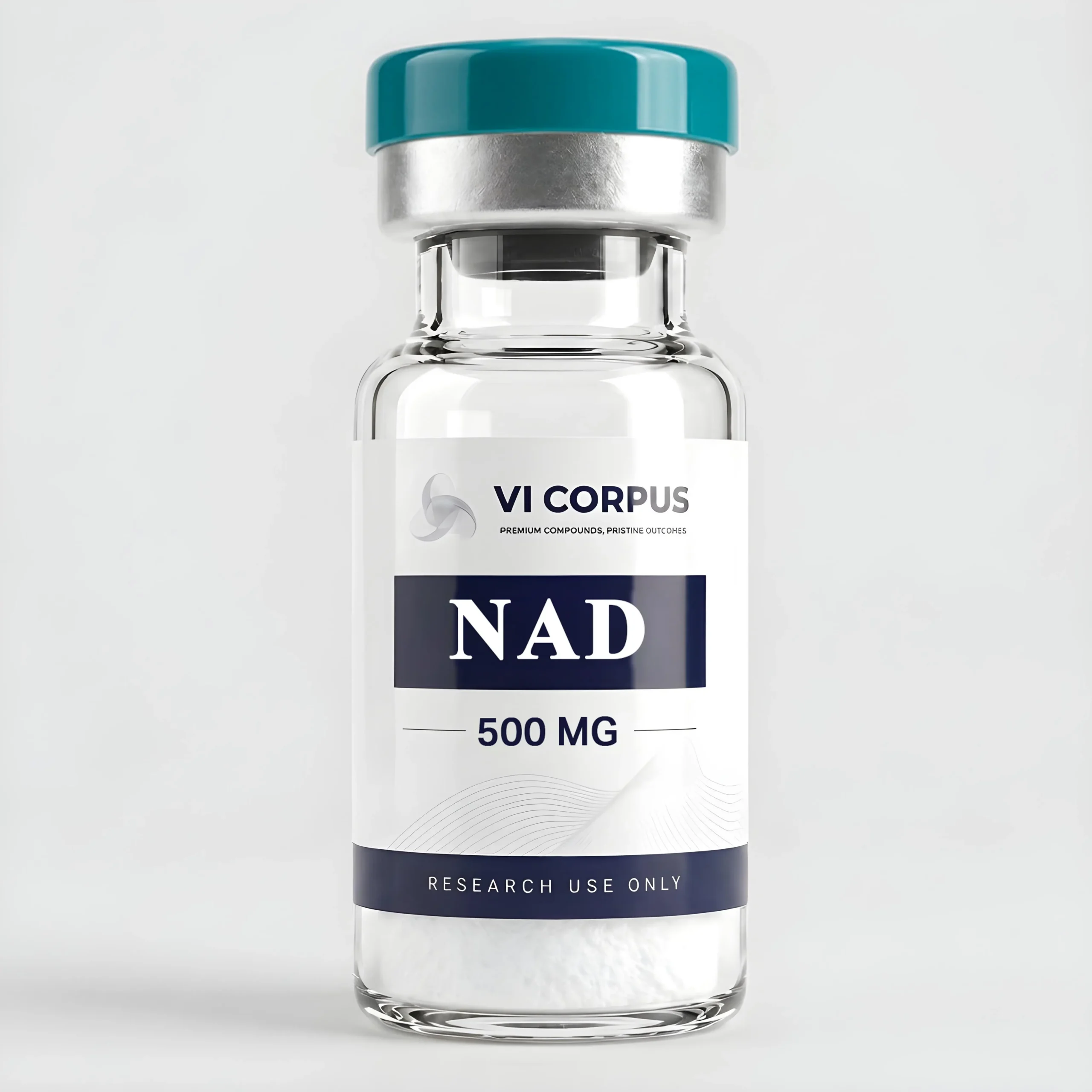
NAD (500 MG) - Nicotinamide Adenine Dinucleotide
38 sold this week
Select a bundle above to unlock your discount
About this product
NAD500 (Nicotinamide Adenine Dinucleotide)
NAD+ — Compound Overview
NAD+ stands for nicotinamide adenine dinucleotide, a compound classified as a dinucleotide coenzyme. Also known as oxidised NAD or β-NAD+, it has a different chemical structure from peptides, which are chains of amino acids.
The name describes its two connected nucleotide units: one contains nicotinamide and the other contains adenine. The “+” notation distinguishes the oxidised form from NADH, its reduced counterpart.
Structure and Composition
NAD+ consists of two nucleotides joined through their phosphate groups. Each nucleotide contains a ribose sugar attached to either adenine or nicotinamide, forming the complete dinucleotide structure.
Its molecular formula contains carbon, hydrogen, nitrogen, oxygen and phosphorus. Unlike a peptide, NAD+ does not have an amino acid sequence, so its identity is recorded using chemical structure, molecular formula and registry identifiers.
NAD+ and NADH are related but chemically distinct forms. Their names and specifications should be kept separate when comparing compound information.
NAD+ Compound Information
| Property | Details |
| Compound name | NAD+ |
| Expanded name | Nicotinamide adenine dinucleotide |
| Alternative names | β-NAD+; oxidised NAD; nadide |
| Classification | Dinucleotide coenzyme |
| Chemical form | Oxidised form |
| Main structural components | Nicotinamide and adenine nucleotide units |
| Sugar component | Ribose |
| CAS number — free-acid form | 53-84-9 |
| Molecular formula — free-acid form | C₂₁H₂₇N₇O₁₄P₂ |
| Molecular weight — free-acid form | Approximately 663.43 g/mol |
Understanding Compound Specifications
“NAD” is often used as a general abbreviation. Including the plus sign in NAD+ makes the listed form more specific and helps distinguish it from NADH.
The molecular formula and molecular weight above refer to the free-acid form. Sodium salts, other salt forms and hydrates may have different specifications, so these details should be matched to the form supplied.
The 500 mg designation describes the listed product quantity. It is separate from molecular weight, which is a chemical property expressed in grams per mole and remains the same regardless of vial size.
Studies and Additional Info