peptides
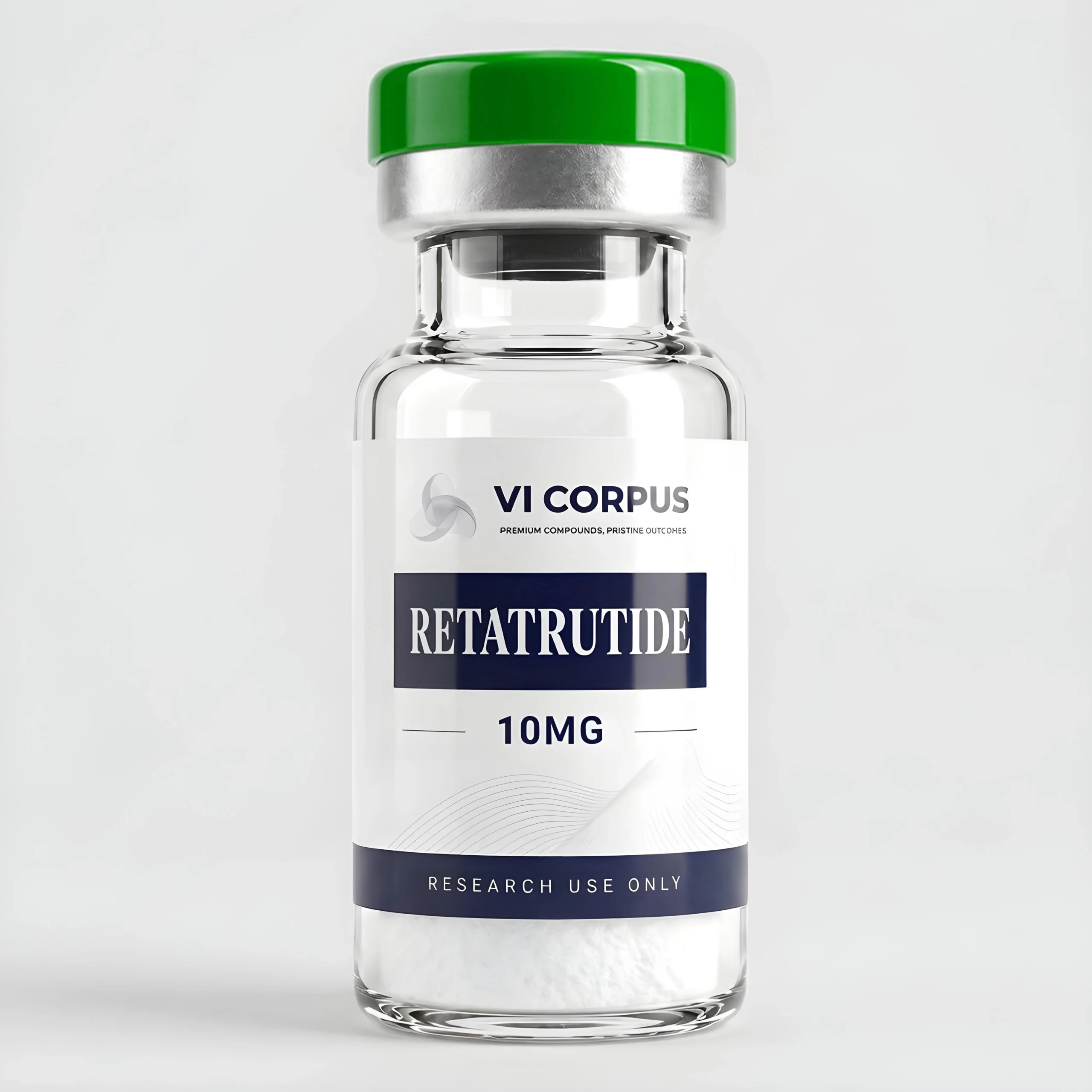
Retatrutide 10MG
23 sold this week
Select a bundle above to unlock your discount
About this product
Retatrutide 10mg: Triple Agonist Peptide for Metabolic and Obesity Research
Retatrutide — Peptide Overview
Retatrutide is a synthetic peptide containing 39 amino acid residues and an attached fatty-acid component. It is also identified by the development code LY3437943.
Its chemical structure combines a defined peptide sequence with non-standard amino acid residues and a side-chain modification. These features, together with its molecular formula and CAS registry number, distinguish retatrutide from other synthetic peptides.
Structure and Composition
Retatrutide has a linear peptide backbone with a modified lysine residue at position 17. A linker connects this residue to a 20-carbon fatty diacid component, which forms part of the complete molecule.
The peptide also contains aminoisobutyric acid, commonly abbreviated Aib, and an alpha-methylated leucine residue. Its carboxyl terminus is amidated, meaning the end of the peptide chain carries an amide group.
The amino acid count describes the peptide backbone. The molecular formula and molecular weight account for the entire structure, including the attached linker and fatty-acid component.
Retatrutide Compound Information
| Property | Details |
| Compound name | Retatrutide |
| Alternative identifier | LY3437943 |
| Classification | Chemically modified synthetic peptide |
| Amino acid count | 39 residues |
| CAS number — parent compound | 2381089-83-2 |
| Structural feature | Fatty diacid component attached through a linker at lysine-17 |
| Fatty diacid chain length | 20 carbon atoms |
| C-terminal feature | Amidated terminus |
| Molecular formula — parent compound | C₂₂₁H₃₄₂N₄₆O₆₈ |
| Molecular weight — parent compound | Approximately 4731.33 g/mol |
Understanding Compound Specifications
Retatrutide and LY3437943 identify the same parent compound. Its identity includes the peptide sequence, modified amino acid residues and attached side chain; the amino acid count alone does not describe the complete structure.
The formula and molecular weight above refer to the parent compound. Acetate and other salt forms should be identified separately in the accompanying chemical specifications.
The 10 mg designation describes the listed compound quantity in the vial. It is separate from molecular weight, which is a chemical property expressed in grams per mole, and does not specify a dose or administration schedule.
Studies and Additional Info
- Phase 2 clinical trial data examining body weight reduction at 48 weeks
- Comparative context versus GLP-1 and dual agonist therapies
- Research into glucagon receptor contribution to energy balance
- Cardiometabolic endpoint analyses in obesity research
Disclaimer: Retatrutide is supplied strictly for laboratory research purposes. It is not intended for human consumption or therapeutic use.
Frequently Asked Questions
What is Retatrutide studied for?
Retatrutide is studied for obesity, metabolic disease, and cardiometabolic risk through its combined GLP-1, GIP, and glucagon receptor activity.
What does the 10 mg vial format represent?
The 10 mg format indicates the total amount of retatrutide contained in the vial and does not define clinical dosing, efficacy, or administration protocols.
How does Retatrutide differ from Semaglutide or Tirzepatide?
Semaglutide targets GLP-1 only, Tirzepatide targets GLP-1 and GIP, while Retatrutide uniquely activates all three receptors, including glucagon.
Why is glucagon receptor activation important?
Glucagon receptor signalling is intended to complement appetite-related pathways by increasing energy utilisation and fat oxidation mechanisms.
Is Retatrutide approved for human use?
No. Retatrutide remains under clinical investigation and is not approved for general human use.