peptides
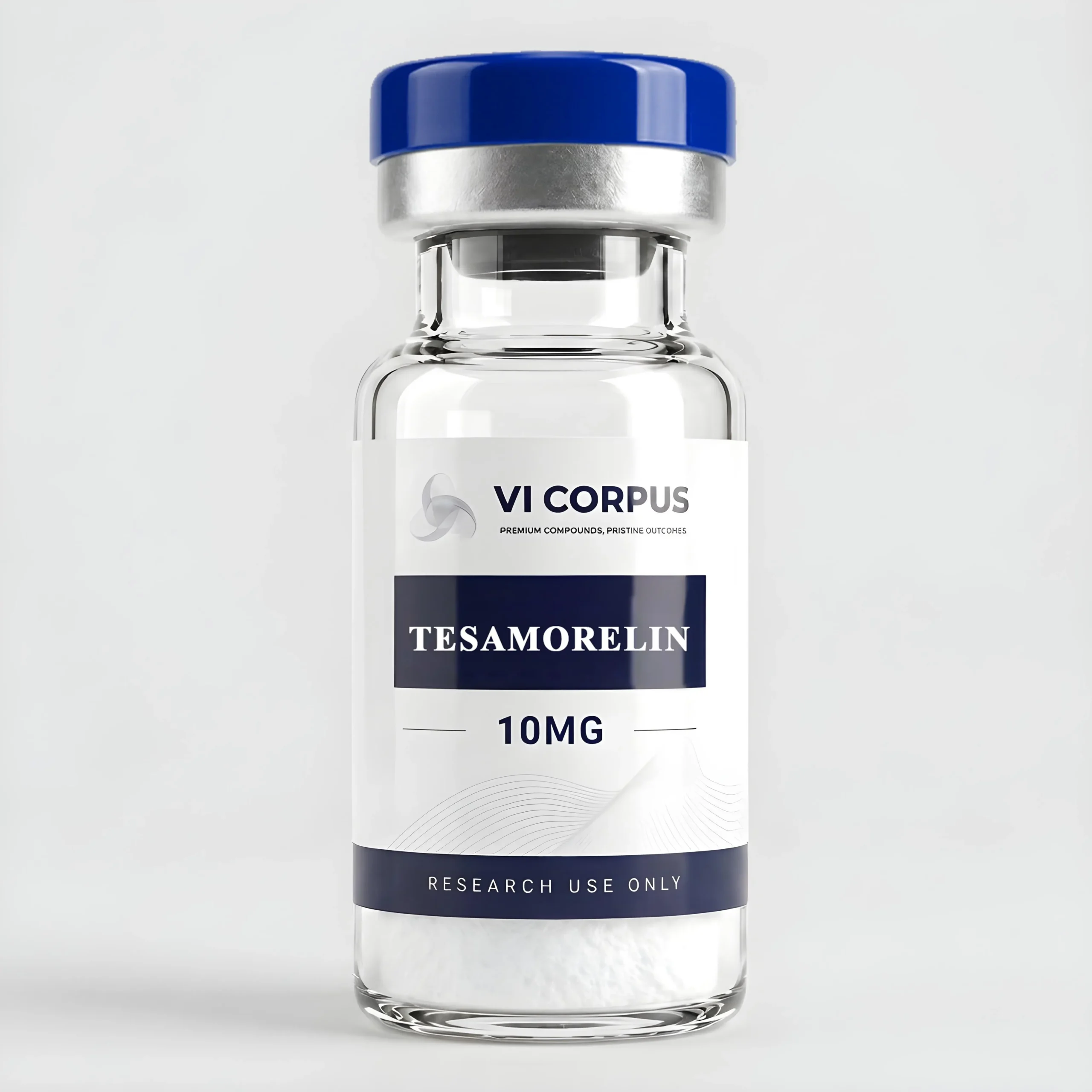
Tesamorelin
31 sold this week
Select a bundle above to unlock your discount
About this product
Tesamorelin
Tesamorelin — Peptide Overview
Tesamorelin is a synthetic peptide comprising 44 amino acid residues with a chemical modification at its N-terminal end. Its structure is based on the amino acid sequence of human growth hormone-releasing hormone, also known as growth hormone-releasing factor and abbreviated GHRH or GRF.
The compound is identified through its peptide structure, terminal modification, molecular formula and CAS registry number. These characteristics distinguish tesamorelin from other synthetic peptides based on GHRH sequences.
Structure and Composition
Tesamorelin contains a linear chain of 44 amino acid residues. A trans-3-hexenoyl group is attached to the tyrosine residue at the beginning of the chain, known as the N-terminus. This group contains six carbon atoms and a carbon–carbon double bond.
The opposite end of the peptide, known as the C-terminus, is amidated. Both terminal features form part of the compound’s chemical identity and are included in its reference molecular formula and molecular weight.
The term “analogue” describes the structural relationship between tesamorelin and human GHRH. It identifies a related molecule with a defined chemical modification.
Tesamorelin Compound Information
| Property | Details |
| Compound name | Tesamorelin |
| Classification | Chemically modified synthetic peptide |
| Structural family | Growth hormone-releasing hormone (GHRH) analogue |
| Amino acid count | 44 residues |
| CAS number — parent peptide | 218949-48-5 |
| N-terminal modification | Trans-3-hexenoyl group |
| C-terminal feature | Amidated terminus |
| Molecular formula — parent peptide | C₂₂₁H₃₆₆N₇₂O₆₇S |
| Molecular weight — parent peptide | Approximately 5135.9 g/mol |
Understanding Compound Specifications
Tesamorelin’s identity includes both its amino acid sequence and its terminal modifications. Peptides with shorter sequences or different chemical modifications require their own identifying information, even when they belong to the same structural family.
The molecular formula and molecular weight above describe the parent tesamorelin molecule. Tesamorelin acetate is a salt form, and its accompanying specifications should identify the acetate component separately.
Compound identity and batch quality are separate pieces of information. Chemical identifiers describe the molecule, while batch-specific analytical records document the characteristics measured in an individual sample.