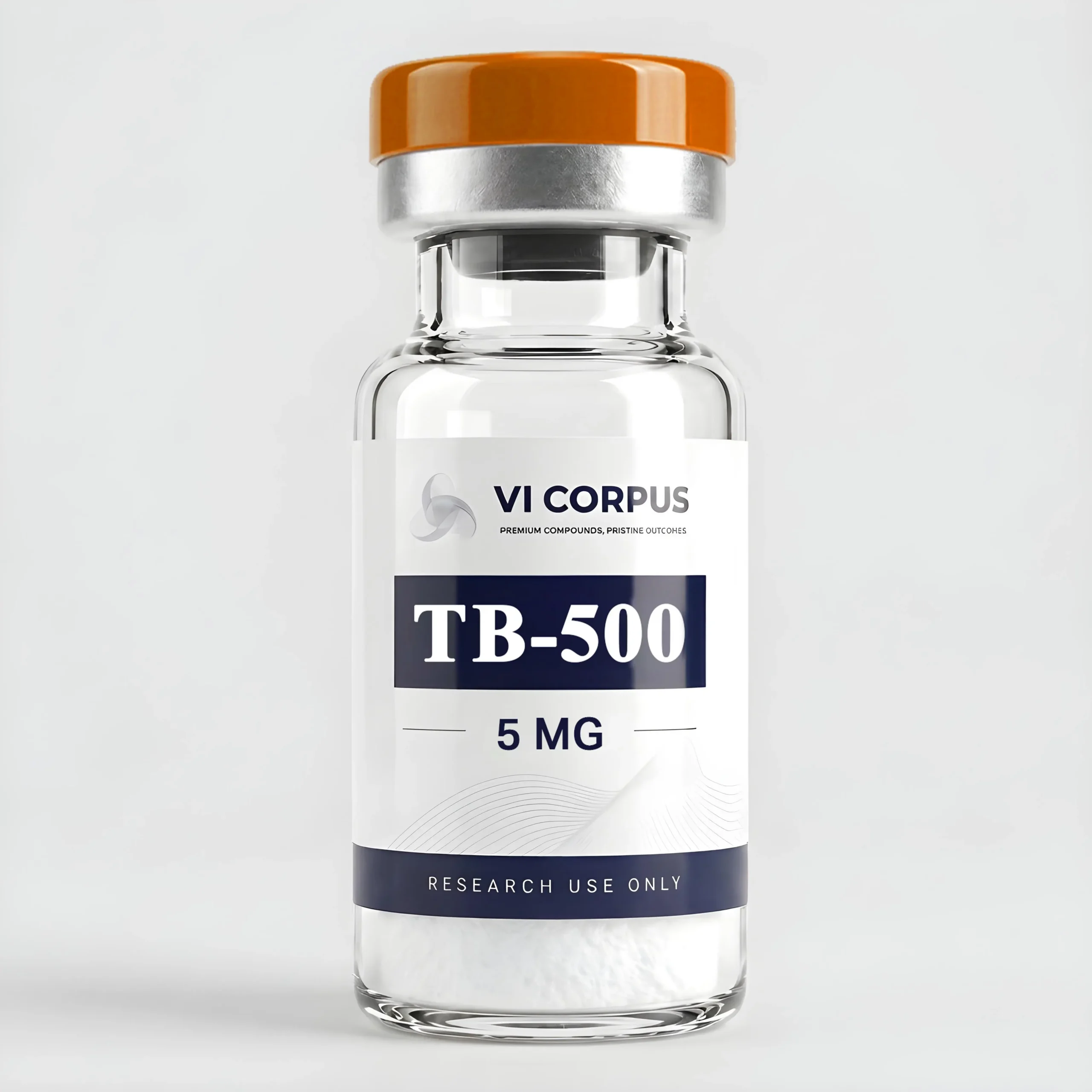
peptides
TB-500
31 sold this week
Select a bundle above to unlock your discount
About this product
TB-500 — Peptide Overview
TB-500 is supplied here as synthetic, full-length thymosin beta-4, a peptide composed of 43 amino acid residues joined in a defined sequence. Thymosin beta-4 is also written as thymosin β4 or Tβ4.
The full-length designation identifies the complete peptide chain. Its chemical identity is described through its amino acid sequence, molecular formula, structural modifications and CAS registry number. These identifiers provide a consistent reference when comparing compound specifications and analytical documentation.
Structure and Composition
Thymosin beta-4 is a linear peptide, with its 43 amino acid residues forming a continuous chain. The molecule carries an acetyl group at its N-terminal end, a structural feature included in the parent peptide’s molecular formula and molecular weight.
The order of amino acids defines the peptide’s primary structure. Both this sequence and its terminal modifications are relevant to identification, allowing full-length thymosin beta-4 to be distinguished from shorter peptide fragments.
TB-500 Compound Information
| Property | Details |
| Product name | TB-500 |
| Compound name | Full-length thymosin beta-4 |
| Alternative compound names | Thymosin β4; Tβ4; timbetasin |
| Classification | Synthetic linear peptide |
| Amino acid count | 43 residues |
| CAS number — parent peptide | 77591-33-4 |
| Structural feature | N-terminal acetylation |
| Molecular formula — parent peptide | C₂₁₂H₃₅₀N₅₆O₇₈S |
| Molecular weight — parent peptide | Approximately 4963.44 g/mol |
Understanding Compound Specifications
Full-length thymosin beta-4 contains the complete 43-residue sequence. References to shorter thymosin beta-4 fragments describe different molecules and should be assessed using their own chemical identifiers.
The formula and molecular weight above refer to the parent peptide. Where the supplied material is an acetate or another salt form, the accompanying specifications should identify that form and distinguish it from the parent-peptide reference values.
Compound identity and batch quality are separate pieces of information. A chemical name or CAS number identifies the substance, whereas batch-specific analytical documentation records the characteristics measured in a particular sample. Any stated purity, quantity or formulation should correspond to the documentation for the supplied product.
Studies and Additional Info