peptides
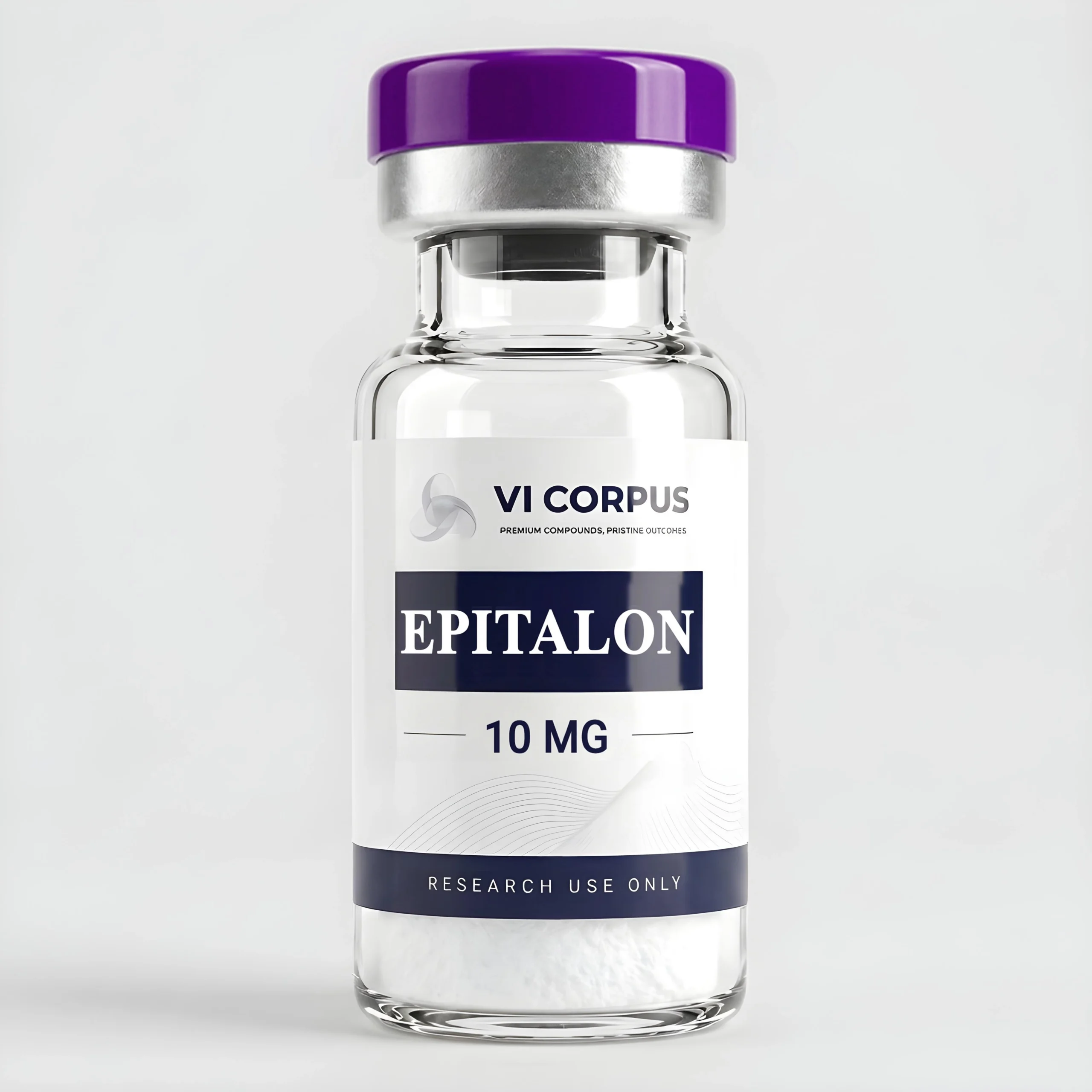
Epitalon 10mg
27 sold this week
Select a bundle above to unlock your discount
About this product
Epitalon 10 mg Epitalon Peptide
Epitalon — Peptide Overview
Epitalon is a synthetic peptide composed of four amino acid residues: alanine, glutamic acid, aspartic acid and glycine. This places it within the tetrapeptide classification, with “tetra” referring to its four-residue chain.
Also written as Epithalon or Epithalone, the compound is identified by the sequence Ala-Glu-Asp-Gly, abbreviated AEDG. These alternative names refer to the same parent peptide.
Structure and Composition
Epitalon has a linear structure, with its four amino acid residues joined in a defined order through peptide bonds. The sequence begins with alanine and ends with glycine.
The abbreviation AEDG uses the single-letter code for each residue: A for alanine, E for glutamic acid, D for aspartic acid and G for glycine. Recording this sequence helps distinguish Epitalon from other tetrapeptides containing different amino acids or a different arrangement.
Its molecular formula describes the carbon, hydrogen, nitrogen and oxygen atoms within the complete parent molecule. The sequence and formula provide complementary ways to identify the compound.
Epitalon Compound Information
| Property | Details |
| Compound name | Epitalon |
| Alternative names | Epithalon; Epithalone; AEDG peptide |
| Classification | Synthetic linear tetrapeptide |
| Amino acid count | 4 residues |
| Peptide sequence | Ala-Glu-Asp-Gly |
| Single-letter sequence | AEDG |
| CAS number — parent peptide | 307297-39-8 |
| Molecular formula — parent peptide | C₁₄H₂₂N₄O₉ |
| Molecular weight — parent peptide | Approximately 390.35 g/mol |
Understanding Compound Specifications
Epitalon’s identity depends on the complete Ala-Glu-Asp-Gly sequence. A peptide with a substituted residue or an added chemical group requires its own structural description, even where its name is similar.
The molecular formula and molecular weight above describe the parent peptide. Epitalon acetate and chemically modified derivatives have separate specifications and should be identified accordingly.
The 10 mg designation describes the listed compound quantity per vial. It is separate from molecular weight, which is expressed in grams per mole, and does not specify a dose or administration schedule.
Studies and Additional Info
These published papers are shared as general scientific background. Both are laboratory studies using cultured human cells. They did not test this product and do not show effects in people.
- Epitalon and telomere length in human cell cultures: a 2025 laboratory study on telomere length in human cell lines. See also the published correction to this paper.
- Epithalon and telomerase activity in cultured human fibroblasts: an earlier cell culture study on telomerase activity.