pct
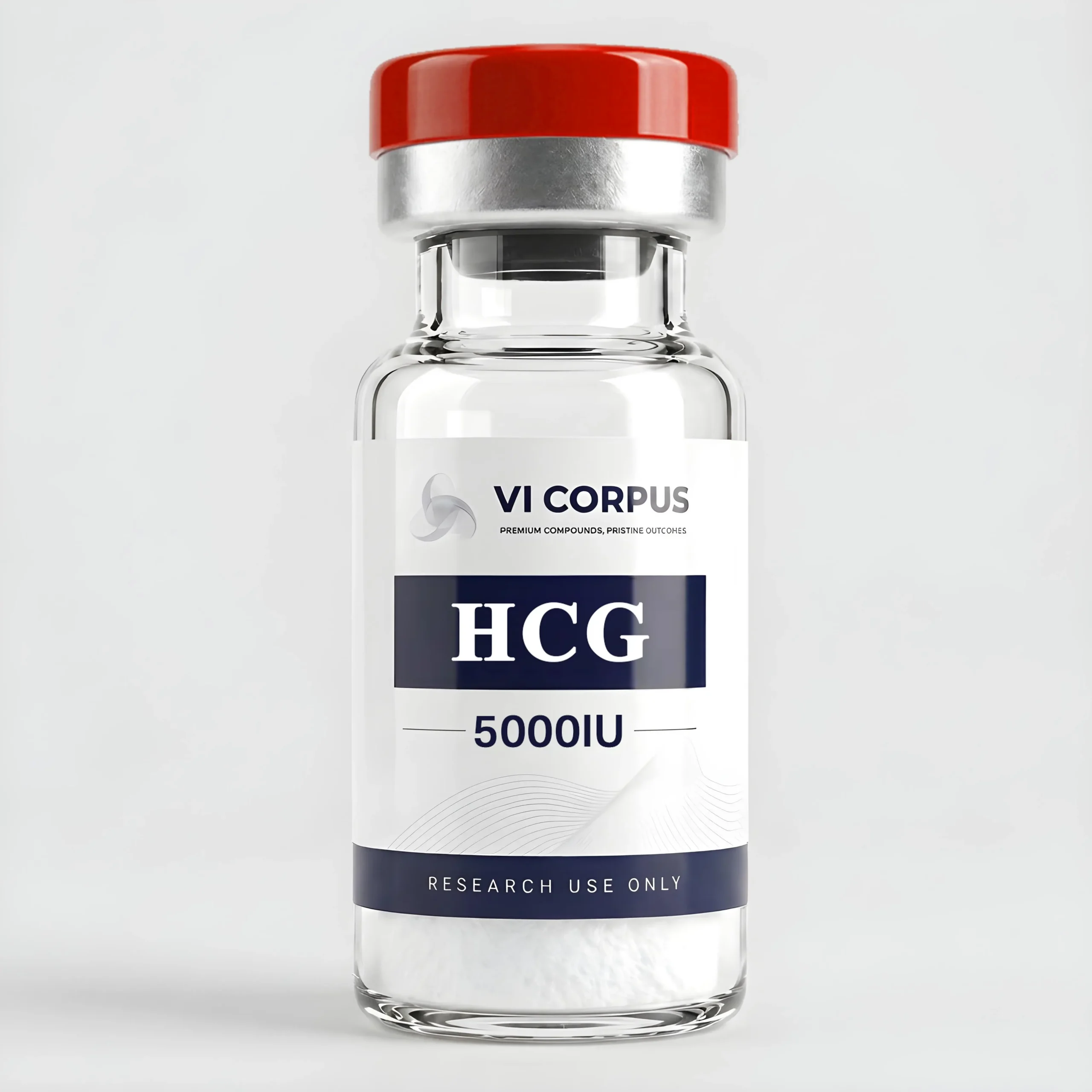
HCG
12 sold this week
Select a bundle above to unlock your discount
About this product
hCG — Compound Overview
hCG stands for human chorionic gonadotropin, a compound classified as a glycoprotein hormone. The term “glycoprotein” describes a protein with attached carbohydrate chains.
Also written as HCG or human chorionic gonadotrophin, it consists of two associated protein subunits, known as alpha and beta. The 5000 IU designation expresses the listed biological activity in International Units, rather than a weight in milligrams.
Structure and Composition
The alpha and beta subunits of hCG are held together through non-covalent interactions. Together, they form the intact glycoprotein structure.
Both subunits carry carbohydrate chains, a structural feature known as glycosylation. These carbohydrate components can vary, producing different molecular forms of hCG with differences in overall mass and composition.
For this reason, hCG is described using its protein structure, glycosylation characteristics and activity measurement. Its specifications require more detail than a single molecular formula.
hCG Compound Information
| Property | Details |
| Compound name | Human chorionic gonadotropin |
| Alternative names | hCG; HCG; human chorionic gonadotrophin |
| Classification | Glycoprotein hormone |
| CAS number — chorionic gonadotropin | 9002-61-3 |
| Protein structure | Two associated subunits: alpha (α) and beta (β) |
| Structural feature | Carbohydrate chains attached to the protein subunits |
| Listed activity | 5000 IU |
| Measurement unit | International Units of biological activity |
| Molecular formula | Varies with the glycoprotein composition |
| Molecular weight | Varies with glycosylation and preparation |
Understanding Compound Specifications
International Units describe biological activity measured against a reference standard. They are different from milligrams, which measure mass. The 5000 IU designation therefore does not describe the total weight of powder in a vial.
The source and manufacturing method also help identify an hCG preparation. Urinary-derived hCG and recombinant preparations should be described accurately rather than assuming their product names and specifications are interchangeable.
For a glycoprotein such as hCG, useful specifications distinguish the compound’s identity, measured activity and formulation. These describe different aspects of the material and should be interpreted separately.